
Inflatable or hard-shell hot tub: which to choose?
Inflatable hot tubs win people over with their price and simplicity; hard-shell hot tubs with their comfort and lifespan. In between, the Plug & Play versions of our hard-shell hot tubs also plug into a standard socket. Here are the differences that matter day to day.
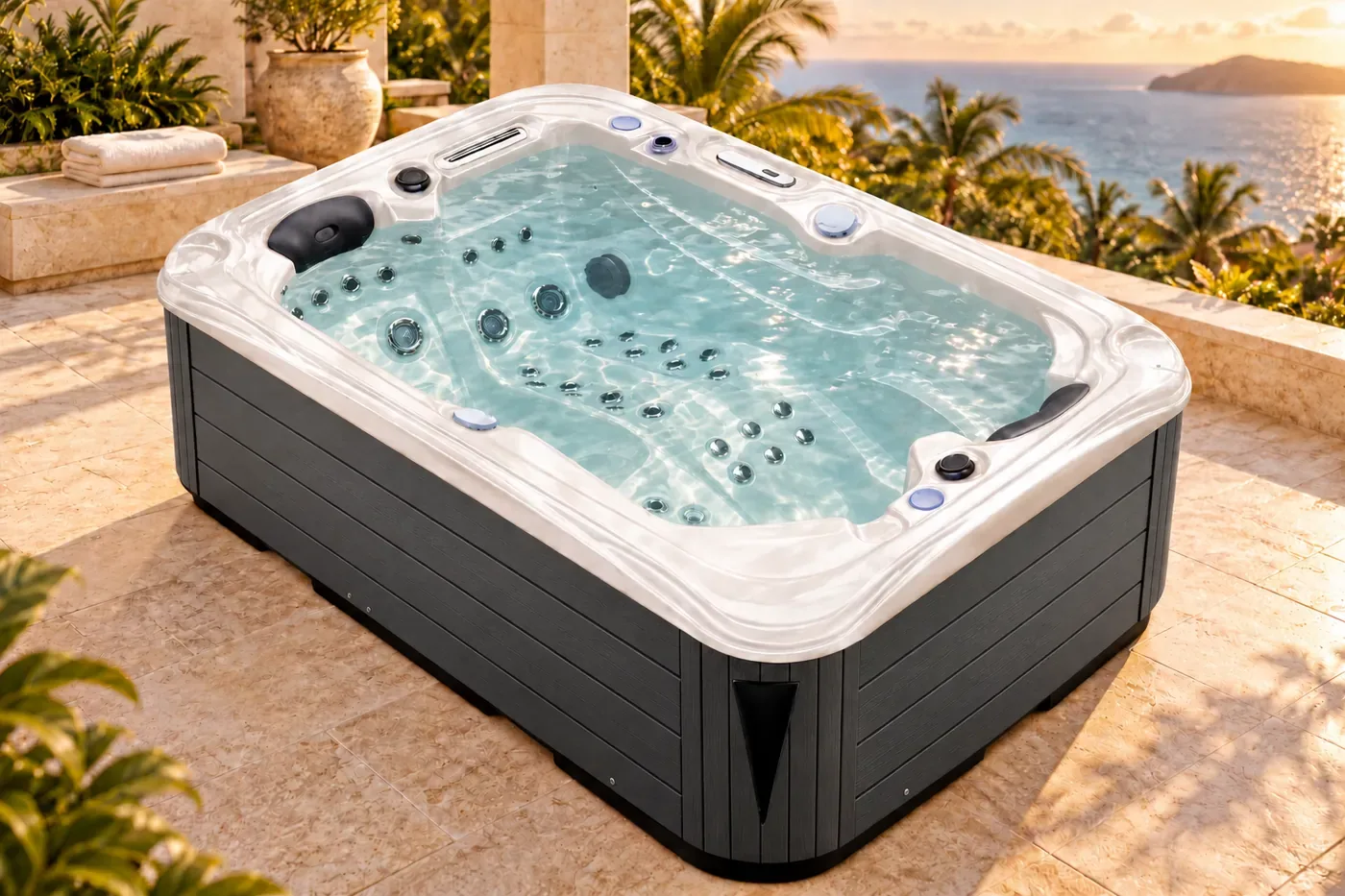
Two different designs
An inflatable hot tub is a soft tub: reinforced PVC walls, inflated with air, placed on a ground mat. You sit on the bottom, with your back against the wall. It can be set up in a few hours and folds flat.
A hard-shell hot tub is a moulded shell, acrylic on our models (often Aristech), supported by a frame and surrounded by cladding. The seats, headrests and loungers are moulded into the shell. The pumps, heater and controls are housed under the cladding, behind a technical panel.
The massage
This is the most noticeable difference. Most inflatable hot tubs massage with air bubbles, released from the bottom: pleasant, but not very targeted.
A hard-shell hot tub massages with directed water jets, driven by massage pumps and often complemented by air jets. Even in its simplest version, Plug & Play, the Samana has 15 jets and one massage pump; its better-equipped versions have up to 63, with a 2,200 W massage pump and an air pump. Depending on the seat, the jets massage the neck and back, or the legs down to the soles of the feet.
Insulation and heating
The walls of an inflatable hot tub insulate poorly, and its heater is generally modest: the water takes longer to heat and cools faster, especially in cold weather.
A hard-shell hot tub is designed to keep the heat in: on many of our models, the tub is insulated with heat-reflective panels, the floor is insulated, and a thermal cover closes the tub. The heater, 3,000 W on most of our hot tubs, keeps the water at temperature all year round.
Winter
Many inflatable hot tub manufacturers recommend emptying and storing the hot tub when it freezes. An inflatable hot tub is therefore often a summer item.
A hard-shell hot tub can be used all year round. Most of our hot tubs have a frost protection mode that protects the water and pipes; with the cover closed, the water stays hot from one soak to the next, even in winter.
Installation and electricity
An inflatable hot tub sits on a flat surface and plugs into a socket.
A hard-shell hot tub needs a base that can carry its weight once filled (usually a concrete slab) and access for delivery. On the electrical side, there are two cases:
- the Plug & Play version also plugs into a standard electrical socket, with no dedicated circuit;
- the other versions need a dedicated circuit installed by an electrician.
See our article Installing your hot tub.
Lifespan and maintenance
An inflatable hot tub ages with its PVC: exposure to the sun, rubbing, risk of punctures. It is replaced after a few seasons.
A hard-shell hot tub is a durable piece of equipment. Water care is the same in both cases (pH, sanitiser, filters), but on many of our models a hard-shell hot tub offers easy, tool-free access to the filters and, as an option, a UV lamp that reduces the amount of products. See our guide Hot tub maintenance.
Comparison
| Criterion | Inflatable hot tub | Hard-shell hot tub, Plug & Play | Hard-shell hot tub, equipped versions |
|---|---|---|---|
| Structure | Soft inflated walls | Moulded shell, frame, cladding | Moulded shell, frame, cladding |
| Seating | On the bottom of the tub | Moulded seats and loungers | Moulded seats and loungers |
| Massage | Mostly air bubbles | Water jets, one massage pump | Many more jets, several pumps |
| Insulation | Low | That of the model | That of the model |
| Winter | Often emptied and stored | Can be used all year round | Can be used all year round |
| Electricity | Standard socket | Standard socket | Dedicated circuit |
| Base | Flat surface | Load-bearing base | Load-bearing base |
The cost over time
To buy, an inflatable hot tub costs much less than a hard-shell one. Over several years, the gap narrows: an inflatable hot tub is replaced after a few seasons, insulates less well (and so uses more to keep the water hot) and often stands unused for part of the year. A hard-shell hot tub lasts a long time and is used in every season. To compare, think in terms of cost per year of use: see our article Hot tub prices.
When inflatable is enough, when to go hard-shell
An inflatable hot tub can be enough to try out hot tubbing for a few weeks each summer, on a small surface, with no installation.
A hard-shell hot tub is the obvious choice as soon as you want:
- a real jet massage, with loungers;
- to soak all year round, including in winter;
- equipment that lasts, covered by a manufacturer's warranty (see Our warranties);
- a hot tub that is part of the garden or the terrace.
The right compromise: the Plug & Play version
To move to a hard-shell hot tub without electrical work, our Plug & Play versions keep the tub, dimensions and construction of the model, with simpler equipment. They come as a 2-seater (Samana), 3-seater (Rio), 4-seater (Bahia), 5-seater (Esperanza), 6-seater (Acapulco) and 7-seater (Borneo).
Find them with our most affordable models on the Budget hot tubs page, and request your quote: an advisor will help you choose the version that suits your installation.
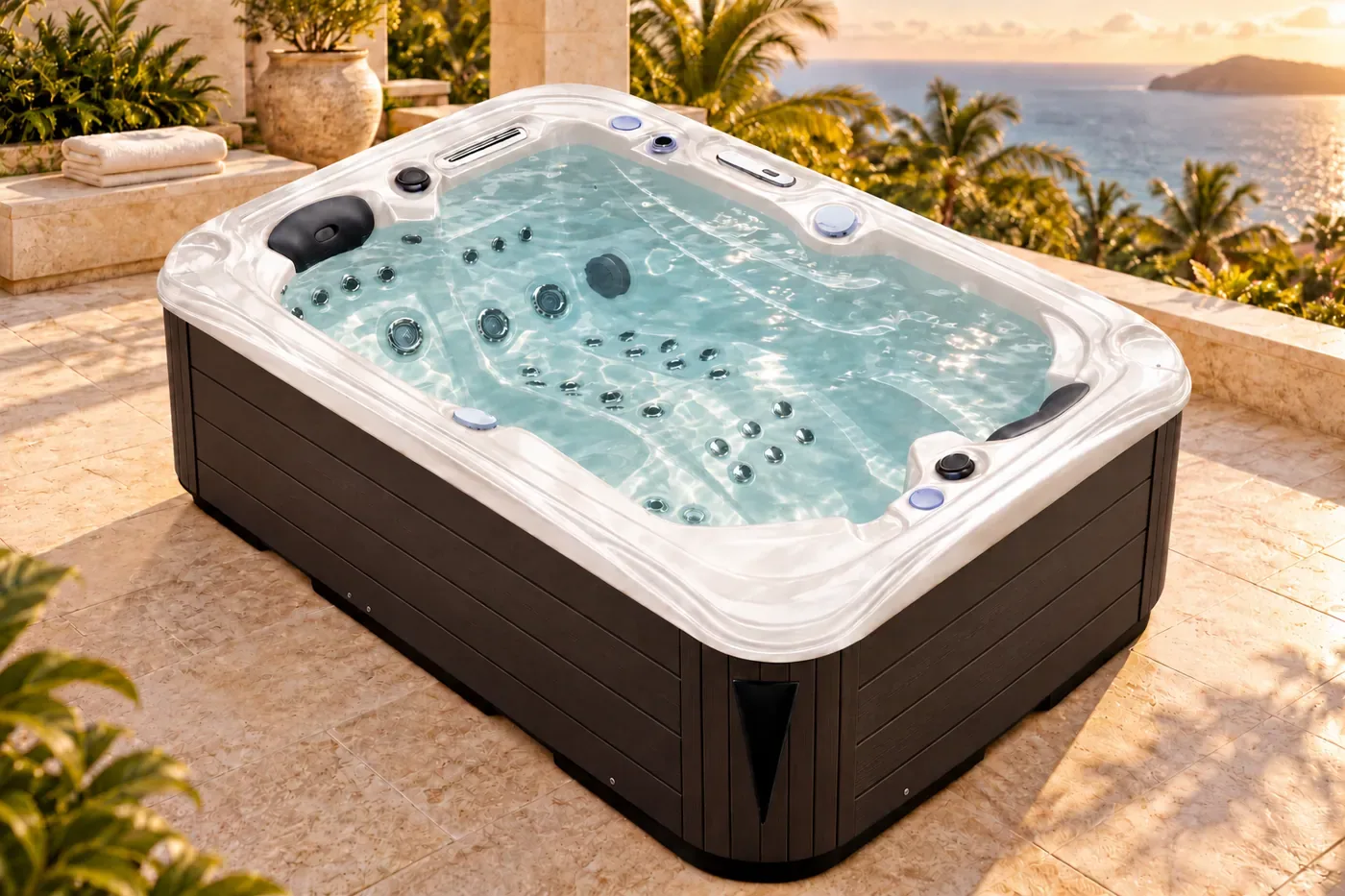 Buying a hot tub: 8 criteria for choosing the right one
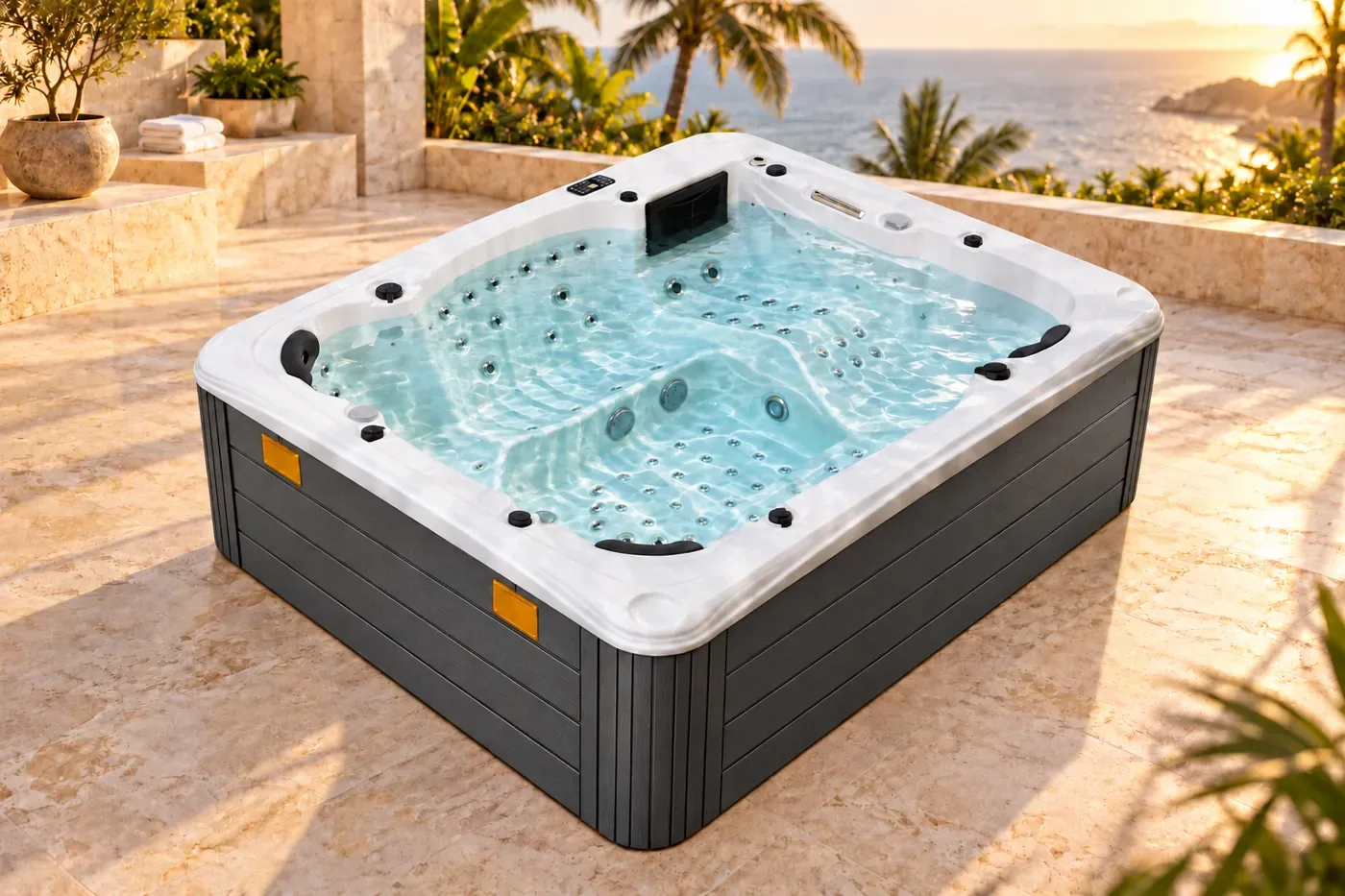 Hot tub maintenance: the routine, week after week
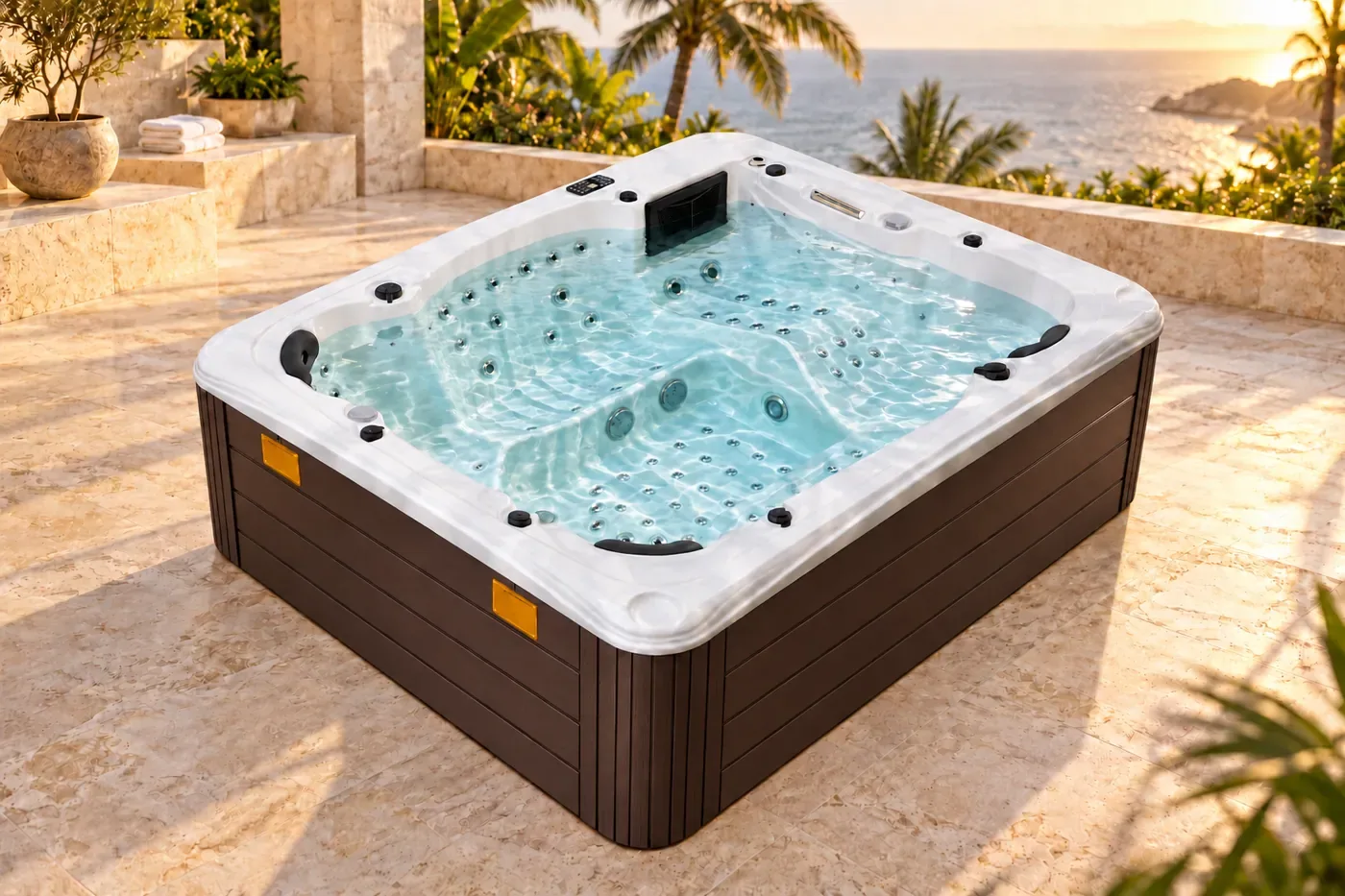 Installing your hot tub step by step: slab, electricity, filling